fbpx

Does the state government have power to set prices of houses?

Property News/ 27 July 2015 No comments

page0023_1Revently, the Negri Sembilan government announced that it will control the price of houses to be built within its state. Mentri Besar Datuk Seri Mohamad Hasan said this is one of the fundamental keypoints of the new state housing policy, which will be finalised soon.

“In this new policy, 15% of houses built must be worth RM80,000 and below, 15% must cost RM250,000 and below, another 20% must be priced below RM350,000, with 50% left to the developer to sell at whatever price they choose,” the minister said.

He added that developers will be required to reserve 50% for bumiputra allocation in any housing scheme, compared to the previous requirement of 30%.

With that, many have asked if this means that the state government has an unfettered discretion to impose any condition that the state authority may think fit, since land is a state matter?

Power of the state

This power of the state authority was first brought into question in the leading Federal Court case of Pengarah Tanah dan Galian, Wilayah Persekutuan v Sri Lempah Enterprise Sdn Bhd [1979] 1 MLJ 135 FC. Below are the facts.

In this case, the applicant company was the registered proprietor of a piece of land held in perpetuity.

The land was in the Federal Territory and the applicant applied to the federal government for sub-division of the land, plus conversion to have the express condition relating to the user of the land amended, to allow the applicant to put up a hotel for which planning permission had been granted.

It also applied to surrender part of the land to the government for use as service roads, side and back lanes.

The matter was referred to the land executive committee and subsequently the director of Lands and Mines, Federal Territory, who informed the applicant that the application would be approved on condition that on surrendering the land, the applicant was to receive back, in respect of the part to be retained by him, not the title in perpetuity but a lease of 99 years.

The state authority argued that section 124(5)(c) is wide enough for the land exco. to impose such a condition.

The question arises whether section 124(5)(c) is wide enough to curtail the exercise of those rights by the imposition of a new condition, which has the effect of changing the very character of the grant the appellants now hold.


There can be no doubt that per se, a perpetuity title is more valuable than a 99-year lease.

Tun Suffian’s view

“If the committee is right, it would mean that it can unreasonably impose a condition that is irrelevant to the permitted development, such as, to take an absurd example, that the applicant should wear a beard for the rest of his life or that he should fly once around the moon.

In my judgment, the committee must act reasonably and may only impose conditions relevant to the permitted development and does not have the drastic right to make the applicant give up the title in perpetuity and receive in place of it only a 99-year lease.”

He added: “The local planning authority is empowered to grant permission to develop land ‘subject to such conditions as they think fit’. But this does not mean that they have an uncontrolled discretion to impose whatever conditions they like”.

“Applying these principles to the present case, it is plain, in my judgment, that the committee does not have the power it claims to have. The condition which the applicant objected to:
1) does not relate to the permitted development;
2) is unreasonable; and
3) is used for an ulterior object, the object being to bring developed land into line with newly alienated land as to which, we are told, since the law only leases, not titles in perpetuity, are granted. However desirable this object may seem to the committee, it has no power under the law, to achieve it in the way used here.”

Landmark observations

Sitting with Tun Suffian was another imminent jurist, the late Raja Azlan Shah AG CJ (Malaya) who made these landmark observations.

“Every legal power must have legal limits, otherwise there is dictatorship. In particular, it is a stringent requirement that a discretion should be exercised for a proper purpose, and that it should not be exercised unreasonably.

In other words, every discretion cannot be free from legal restraint, where it is wrongly exercised, it becomes the duty of the courts to intervene. The courts are the only defense of the liberty of the subject against departmental aggression.

“In these days when government departments and public authorities have such great powers and influence, this is a most important safeguard for the ordinary citizen, so that the courts can see that these great powers and influence are exercised in accordance with law.

I would once again emphasise what has often been said before, that public bodies must be compelled to observe the law and it is essential that bureaucracy should be kept in its place.”

“For the above reasons, it does not seem to me that the decision of the land executive committee can possibly be regarded as reasonable or as anything other than ultra vires.

It had exceeded its power and the decision was therefore unlawful, as being an unreasonable exercise of power not related to the permitted development and for an ulterior purpose that no reasonable authority, properly directing itself, could have arrived at it.

The committee, like a trustee, holds power on trust and acts validly only when acting reasonably.”

Price control

The issue of price control of houses is not new and has been discussed previously in the highest courts of law in the country. One such case is the landmark case of Majlis Perbandaran Pulau Pinang vs Syarikat Berkerjasama Serbaguna Sungai Gelugor [1999] 3 CLJ 65.

In this case, the dispute was whether the Penang City Council had the power to impose the disputed condition that 30% of low-cost houses have to be built and sold at a cost not exceeding RM25,000 per unit in accordance with the council guidelines on low-cost housing”.

The society agreed at its AGM that the selling price of a two-bedroom flat, measuring an average of 500 sq ft, shall not exceed RM32,000 and a three-bedroom flat, measuring an average of 650 sq ft, shall not exceed RM45,000.

In a dilemma due to the ceiling price stipulated in the guidelines on low-cost housing, the developers sought the intervention of the courts as they were of the view that the council had no such power to impose such conditions relating to prices of houses.

The case, described as a “veritable legal porcupine bristling with interesting and complex points of law” went on appeal to the Federal Court. It was a landmark case in the field of Planning Law and Judicial Review in this country and counsel on both sides put up very convincing arguments for six days.

At the end, Edgar Joseph Jr FCJ (Federal Court judge) made no apologies for the acres of paper and streams of ink devoted to the preparation of the unanimous judgment by the Federal Court.

He held that it was axiomatic that local authorities are creatures of statute and their qualities and powers can only be derived by reference to what is expressed or implicit in the statutes under which they function (see for example, Lord Wilberforce in Bromley L.B.C. v. G.L.C. [1983] 1 AC 768, 813).

The statutory scheme of the Local Government Act confers upon local authorities a distinct political function, to which the courts, by application of ordinary principles of statutory construction should give effect.

“Taken at its full face value, the above provisions would appear to confer unlimited power on the planning authority to impose any condition it wishes, for example, because it considers the condition to be in the interest of the housing policy of the state government. But, the matter must be probed further.”

On probing deeper, the Federal Court concluded that the whole of the decision of Majlis Perbandaran Pulau Pinang was wholly null, void and of no effect and stated that the Majlis had no power to impose conditions relating to prices at which the houses have to be sold by the developer.

Next issue

The next question was: Can developers be forced to give discounts as part of the planning approval process?

In Cayman Development (K) Sdn Bhd vs Mohd Saad Bin Long [1999] MLJU 290, Cayman was a housing developer who wanted to develop a piece of land in the Mukim of Alor Merah, Alor Star, into a low-cost housing scheme and the state authority of Kedah imposed a condition.

It stated:
“Menjual rumah-rumah yang dibina dengan harga kurang lima peratus daripada US$25,000 ($23,750 – bumiputra discount).
[Translation: “To sell the built houses with 5% discount off US$25,000 (US$23,750).”]

When the developer sold the houses without the stipulated discount, the purchasers sued the developer to enforce the discount as imposed by the state authority of Kedah.

At the High Court, Hishamuddin J. (as his lordship then), held that the state authority had no power to fix the requirements regarding the price of each of the units to be sold to the public, as well as the discount of 5% as these are not the kind of requirements envisaged by the National Land Code.

Hishamuddin then held: “I have no doubt whatsoever of the good intention of the state authority, and that in prescribing the price and the discount, it certainly had in mind the interest of the low income section of the general public, who would constitute the potential buyers of the low-cost units.

“Yet, with the greatest respect, I do not think that Parliament, in enacting subsection (5)(c), had in mind to confer on the state authority such a wide power, so as to empower it to even fix the price of the low-cost units for the purpose of sale to potential buyers, let alone to prescribe any discount.”

“Such requirements, as imposed, are commercial in nature. The state authority, being a regulatory body on matters pertaining to land, in determining the nature of the requirements to impose (if any) when approving a conversion, should avoid entering into the commercial arena.

“Instead, it should only confine itself to matters directly pertaining to the usage of the land and the imposition of rent and premium (consequential to the conversion).”

All these cases illustrate the point that both the state authority and Majlis have no unfettered power to impose any condition relating to prices of houses and discounts as these are considered to be commercial aspects that they should avoid entering into.

Being mere regulatory bodies, they should only confine themselves to regulatory matters such as prescribing the usage of land and the imposition of rent and premium consequential to the conversion (of usage of the land). Furthermore, any imposition of penalty on developers for failing to comply with unlawful conditions may itself be unlawful.

All these cases remain unchallenged and continue to be good precedents as there have not been any legislative amendments to overturn these decisions.

No doubt that the intention of the state authority may be noble but the law, as it stands, only allows the state authority to impose conditions “relating to the permitted development only” and not in relation to price of houses and discounts that ought to be given.

Datuk Pretam Singh Darshan Singh, a lawyer by profession, has previously worked as Senior Federal Counsel, Deputy Public Prosecutor with the Attorney-General’s Chambers and legal advisor to several government departments and agencies. He is currently the partner in a legal firm while simultaneously serving as President of the Tribunal for Home Buyers’ Claims.

Source: TheSunDaily.my

Tags:

Sky Residence @ BM Utama

Bukit Minyak/ 24 July 2015 10 comments

sky-residence-bm-utama

Sky Residence @ BM Utama, the phase 5 of BM Utama housing scheme by DNP Land at Bukit Minyak. It is merely 5km from Juru toll (Autocity) and about 15 minutes drive from Penang Bridge. Its neighbourhood comprising well established residential scheme such as Taman Kota Permai, Desa Palma and Taman Permai Jaya.

The upcoming development comprises 93 units of 2-storey terrace and 4 units of semi-detached houses. It is currently open for registration only. More details to be available upon project launch.

Property Project : Sky Residence
Location : Bukit Minyak, Penang
Property Type : 2-Storey Terrace and Semi-detached
Tenure: Freehold
Total Units: 93 (terrace), 4 (Semi-d)
Developer : DNP Land

Location Map:

Tags:

Post-GST and Impact to the Property Investors: What’s next?

Property News/ 22 July 2015 No comments

* Article by Freemind Works *

We are coming into the third quarter of the year, and is now in the so called post-GST era. Whilst some argue that it is still too “early” into the GST implementation to really read the property market, some said it’s the best time to start bargain hunting.

Click here to download FREE E-book to know more about property investment strategies

houses

This year we have entered into a very exciting phase of the property cycle. In Penang, we have observed that the number of property transaction has reduced quarter to quarter; however the value of the transacted properties has increased. The cooling down measures introduced (LTV70%, revised RPGT and etc) had had some impact on the market. Despite these measures, however, the property price is still on the uptrend, and I foresee the property price will still go on higher.

The question now, then, is how does this latest development effect you and I as a property investor? Is it time to buy, hold or sell … what are the market sentiments now?

Find out more on how to invest in properties here

Well, to give you an idea of the market sentiment in Malaysia and especially in Penang, here are some of the comments I hear from participants who attended my public talks:

• Property price is expensive
• I cannot afford to own my property
• Is there a property bubble?
• Is now a good time to invest into property?
• I prefer to still wait and see how the market will trend

While I do agree that property prices have gone up substantially these past few years, there are still properties that is within our affordability depending on our budget. What an individual meant when he or she commented that “property price is expensive, therefore I cannot afford to own a property”, is essentially saying that new launches by developer is far above his or her affordability range.

However, if we look harder, we will still find property that is within our affordability range, yet at the same time, provide good returns (rental and capital). Let me share with you how you and I can still invest in the current property market especially in the Penang property market regardless of the current sentiment.

Back to Basic – Fundamentals of investing

Historically, properties have always appreciated with time and proven to be good investment vehicle to hedge against inflation. What is important to know is to buy into the right location with the right fundamentals, never on speculation.
A tip for you: many properties from the DIBS era has just completed and ready for occupancy. Good deals is out there as it is the buyers market now; regardless if you are buying for own stay or for investment purposes.

For investment purposes, the reference to note is the rental market. As you will need to either rent it out or sell it. Selling prices are closely related to the rental prices as well, therefore, you always need to ask yourself “Who is my target tenant?” Know the rental returns. With the exception of houses, a good benchmark for all residential investment grade properties is about 6% (or more) rental returns.

In addition, the take-up rate and occupancy rate of the properties in the surrounding areas is also important. Ask this, “How long does it take for me to rent it out? Is there more demand or supply in this area?” Finally, is your target tenant’s population growing or dwindling?

Switch To Secondary Market And Look For Deals

Buying from developers or (primary market) have lost some appeal now that Developers are prohibited from offering DIBS. Secondary or sub-sale market has, somehow been, less sexy than the primary market. However, I have always invested in the secondary market and make profit from there. What’s more, I still have positive cash flow into our pockets monthly.

Come and listen to the property investment strategies to get higher-than-market rental returns

Secondary Market: The How To and Where To

When I invest into the secondary market, I am assured of monthly income coming in to offset the installment, what we call the TIBS – Tenant Interest Bearing Scheme.

The key word here is look for properties below market that will generate you good rental return.

Where to buy, you ask? I say everywhere is a good to buy as long as the research is done right.

Stay Tune for my next article on how you can add value to your property to get higher-than-market rental return.

For the past 4 years, FREEMEN has coached 1120 people from Malaysia (Penang, KL and JB) to buy 1139 properties in the secondary market that yielded a minimum of 6.0% return in the past 7 years.

Come and Meet Us

Here, I would like to invite you to come and meet us on the 8th August 2015 at Evergreen Laurel Hotel, Penang where my mentors and Property Experts, Michael Tan a.k.a Millionaire Maker and Adrian Wee a.k.a ID King, will be in town to share with you about property investment strategies. And if time permits, they will help you determine the size of your property portfolio, which is an indication of the type of properties that you can and should focus on.

So, book your seat early as we are expecting a full house. Now, tpeople usually have to pay the retail price of RM197/pax ,

* BUT, I will give this deal to Penang Property Talk reader : You get all these learning for only RM57! And For 1st 47 people who register here NOW! will also get a FREE Penang map from Ho Chin Soon and other bonuses.

So hurry, take action now to register here as seats are limited.

Happy Investing,
Keegan.

Keegan Tan is a Property Investor and Property Coach. He has coached more than 200 Penangites who have bought their property no money down. He is also the Founder of Freemind Works, an organisation that empowers individual to achieve their dreams through continuous education. Keegan has been featured in the News Straits Times and Property Insights. He has also spoken in Property Expo and Property Convention in front of a crowd of more than 300 people.

[Sponsored]

Tags:

Sunway Cassia – Semi-D (Final Phase)

Batu Maung/ 22 July 2015 4 comments

sunway-cassia-semi-d

Sunway Cassia @ Batu Maung, a residential development buy Sunway Property in Batu Maung, Penang. It features 6 thematic parks with lush landscapes within the development. Less than 5 km away from the Second Penang Bridge and Penang International Airport.

The final (3rd) phase of Sunway Cassia comprises 48 units of 2-storey semi-detached houses with two types of built-up size to choose from – 3,196 sq.ft. and 3,770 sq.ft. Indicative selling price starts from RM 1.6 million onwards.

Other Phases:

Property Project : Sunway Cassia – Semi-D (3rd phase)
Location : Batu Maung, Penang
Property Type : 2-Storey Semi-detached
Total Units: 48
Built-up Area: 3,196 sq.ft. & 3,770 sq.ft.
Land Area: 2,975 sq.ft. onwards
Tenure : Freehold
Indicative Price: RM 1,600,000 onwards
Developer : Sunway City

Location Map:

Tags:

Steady property demand in Penang

Property News/ 21 July 2015 No comments
bizd_pg6_July21_ky_1

Investment-friendly: A file picture shows visitors at the recent Star Property Fair in Penang. Affin Hwang believes that property developers with land bank and established presence in Penang will benefit from rising property demand.

An increasing population in Penang coupled withlong-term property demand will be supported by major projects driven by public-private partnerships (PPPs), according to Affin Hwang Capital Research.

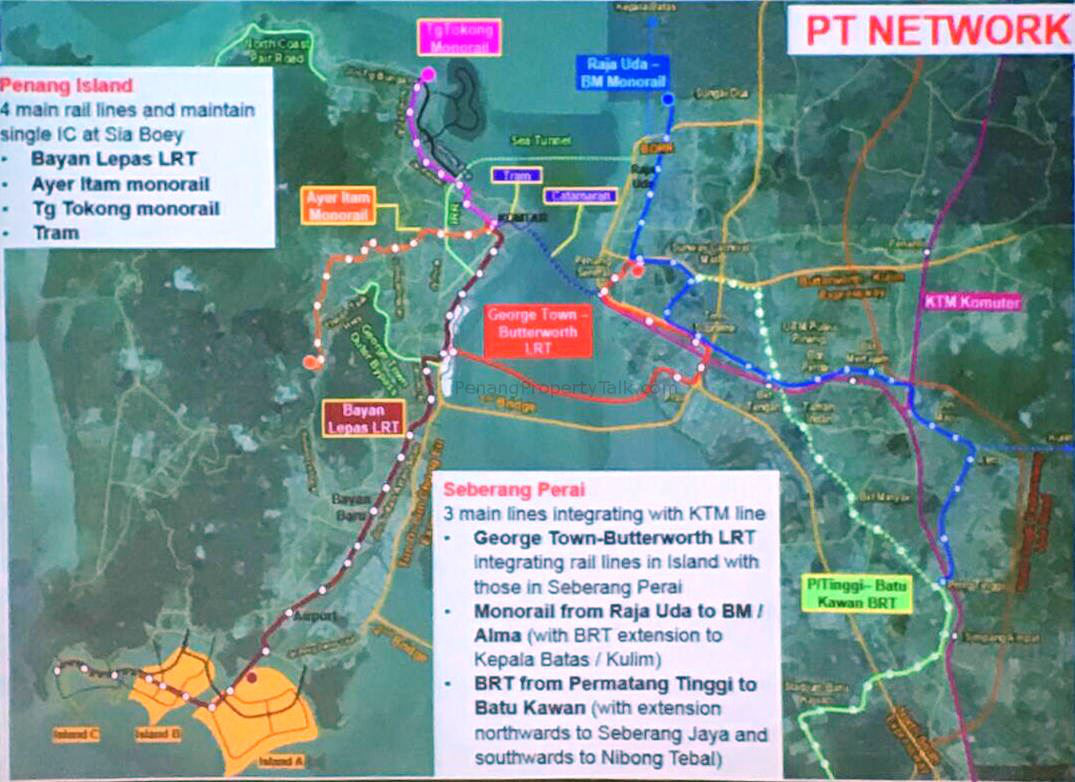
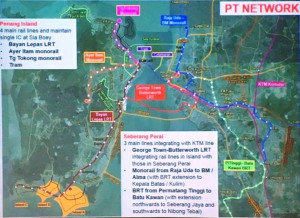
Among the PPP projects, the largest being the RM27bil Penang Transport Master Plan (PTMP), could be awarded by September. Singapore’s Temasek Holdings also has a proposed joint venture with Penang Development Corp (PDC) to develop an RM11.3bil business process outsourcing centre and an international technology park.

The research house said in a report that its top stock picks for infrastructure and property exposure to Penang were Gamuda Bhd, IJM Corp Bhd, and Eastern & Oriental Bhd (E&O).

It said the Penang government had pushed for the economy to move up the value chain by encouraging knowledge-intensive and innovation-led manufacturing and services.

“Property development companies such as E&O, Eco World Development Group Bhd and Ewein Bhd are embarking on new large-scale mixed development projects in the state with total gross development value (GDV) of RM60bil,” it added.

E&O has the highest exposure to Penang with property development projects in the state comprising 77% of GDV totalling RM34bil.

The multi-billion ringgit PTMP has seen keen interest, with six consortiums submitting bids to be the project delivery partner (PDP) while Affin Hwang Capital understands that discussions for the joint venture with PDC were in the final stages.

“The joint development agreement is expected to be inked in July or August. Work on the BPO Prime is expected to start in the first quarter of 2016.” The entry of Temasek would also attract more Singapore companies and other foreign investors to Penang.

“We believe Gamuda will likely be appointed the PDP for the project. Also, being one of the largest contractors in Penang, IJM Corp is expected to win a substantial portion of construction work for the PTMP,” it said.

“The Penang government also managed to convince Hewlett-Packard to choose Penang as the location to set up its new RM1bil manufacturing facility instead of Iskandar Malaysia.”

The plant would produce high-speed inkjet printer heads for the global market.

A ready pool of skilled workers out of a total workforce of 797,700, developed infrastructure, established information technology eco-system, and consistent and investment-friendly state government policies could be the reasons why Penang continue to be attractive compared with Iskandar Malaysia.

The island’s popularity with tourists, diverse culture, historical attractions, beautiful coasts and famous cuisine were added attractions.

“We believe property developers with land bank and established presence in Penang will benefit from rising property demand in the long run.

“Job creation from rising investments in industrial and service sectors should support population growth from organic expansion and inbound migration,” said Affin Hwang Capital Research.

Source: TheStar.com.my

Tags: