fbpx

Mah Sing on aggressive land acquisition trail

Property News/ 9 October 2010 No comments

title=Group managing director Tan Sri Leong Hoy Kum said the company is on an aggressive land acquisition trail.

For government land, Leong said Mah Sing is open to cooperation with relevant government-linked companies, but he declined to disclose the name of the company it is talking to.

"We are confident that we will lock in more land soon. We do not want to miss the chance to buy government land, more so with the mass rapid transit (MRT) project that is coming up.

"There are also many government projects being tendered out from now until the middle of next year … so we must get ourselves ready to capitalise on the opportunity," Leong said.
The three-line MRT project, costing more than RM30 billion, is to improve public transport in the Klang Valley.

Mah Sing has RM300 million cash in hand, some of which will be used to buy land. By early next year, it expects to receive RM215 million from the sale of an eight-storey building to Koperasi Permodalan Felda Bhd.

"We have enough funds," Leong said yesterday after the company's extraordinary general meeting in Kuala Lumpur.

Mah Sing has 21 ongoing projects worth RM6.3 billion in the Klang Valley, Penang and Johor. It is planning 10 more projects, expected to be launched from year-end.

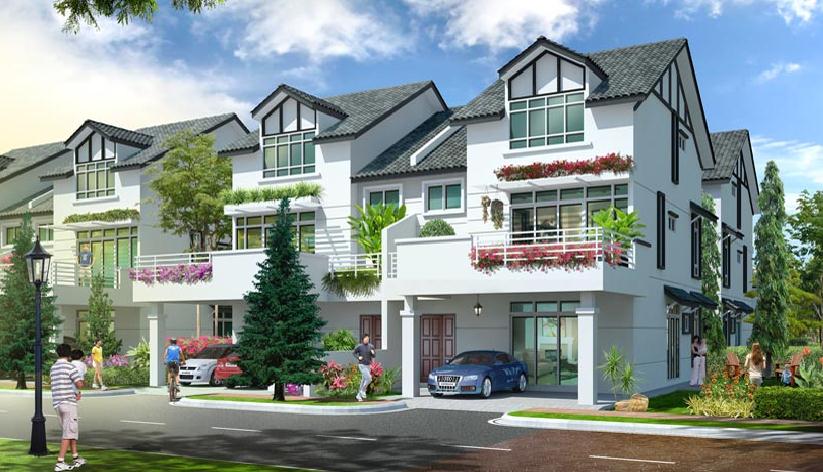
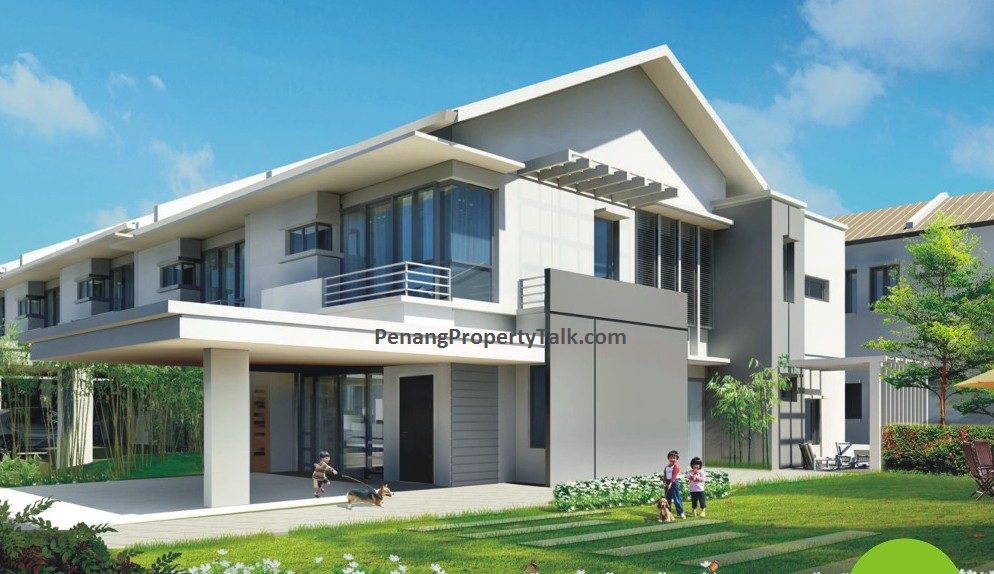
Among them are Kinrara Residence, a RM830 million medium- to high-end housing development in Puchong, featuring 836 bungalows as well as semi-detached and super-link homes.

Leong said he is confident the company's sales this year will surpass the RM1.5 billion mark, due to strong numbers already locked in from its balanced and diversified property portfolio. Up to July this year, it had raked in RM1.02 billion.

Leong also said that he is bullish on the property market for the next one to two years.

"We should not worry too much about over-heating. We are promoting Malaysia 'My Second Home' scheme in China, Singapore, Hong Kong, Taiwan and Europe. Some 10 per cent of foreigners contribute to our sales and we expect more going forward," he said.

Mah Sing also hopes the government will further open up its policies to encourage foreigners to buy properties in Malaysia, especially those in the high-end segment, he added.

SOURCE: Business Times

Tags:

Increase in property gains tax unlikely

Property News/ 9 October 2010 No comments

PETALING JAYA: The property market, especially in the Klang Valley and Penang, are showing signs of getting frothy, so much so that talks about higher tax on property gains are getting louder as Budget 2011 announcement gets nearer.

Re-introduced earlier this year at the rate of 5% after a three-year hiatus, there are those who view that the real property gain tax (RPGT) should be implemented back on a original progressive scale where short-term gains are taxed the heaviest.

But industry players, understandably, are not too thrilled about the prospect on higher taxes.

“Personally, I don’t think the Government will increase it,” Master Builders Association of Malaysia (MBAM) president Kwan Foh Kwai told StarBizWeek in a telephone interview.

“But you’d never know what will happen next week,” he said.

The Government will table its Budget 2011 in Parliament on Oct 15.

From the contractors’ point of view, Kwan said, a healthy property market would benefit the whole economy.

“Prices had gone up in the past few quarters, but can be still considered relatively low because the market was stagnant in 2008,” said Kwan, who is a director at Sunway Holdings Bhd.

OSK Research, in a recent report said one potentially negative news for the sector could come in the form of a cap on loan to value ratio.

Such a move would probably be aimed at second or third home purchases, while first-time house buyers would probably be allowed to continue to borrow up to 90% of the property value.

Meanwhile, Bank Negara had increased interest rate three times so far this year from a record low level.

The Government re-introduced RPGT in the Budget 2010, but at concessional rate of 5% for disposal of properties held less than five years.


SOURCE: The Star

Tags:

Sales of high-end properties still brisk

Property News/ 9 October 2010 No comments

PETALING JAYA: High-end properties, especially condomimiums costing RM1mil and above, are still enjoying good sales backed by favourable financing, although some buyers are turning cautious in anticipation of upcoming budget measures to cool the property market.

“Currently, we do not feel there is pull back on banks in financing for high-end projects and the property overhang in this sector is not as serious as perceived,” Real Estate And Housing Developers’ Association Malaysia (Rehda) president Datuk Michael Yam told StarBizWeek.

The overhang could be in specific locations that refer mainly to strata titled properties such as condominiums in prime locations that cost RM500 per sq ft, and these comprise probably less than 5% of all properties sold in Malaysia,

Under this category, there may be some high-end properties in Mont’Kiara, KLCC and possibly, some condo projects in prime areas located in Penang and Johor.

On a possible financial crunch on developers post budget, he said: “That is left to be seen but it is likely that financial institutions would apply due diligence in giving out credit, based on track records of individual developers.”

However, Yam pointed out that this small high-end segment should not be overlooked.

“This high-value property segment can have a significant impact on economic growth. The economic stimulus vis-a-vis the Economic Transformation Programme are critical to the future vibrancy of this segment,” he said.

On the Government’s proposed deposit requirement on homebuyers to cool down property speculation, Yam said Rehda suggested that for the first and second properties, it would be better to allow the banks to assess the homebuyers’ financial position for deposit requirement on the property.

Real estate property consultant Amy Chung, who focuses on high-end condos in the Golden Triangle area in Kuala Lumpur, said more locals were buying these condos, backed by access to financing and the rental market.

“They mostly buy from foreigners, who are the first homebuyers, paying a minimum of 25% above the foreigner’s purchase price about one and a half years ago,” Chung said.

However, the situation was different during the downturn when most of the buyers were foreigners.

A property agent in the Golden Triangle agreed that the take-up rate for high-end condos was improving each year.

“But we feel it could be much better. There are still many high-end condos not sold and many of these properties are above the means of locals.”

She estimated the occupancy rates in various property projects as: K-Residence (less that 5%); Hampshire Residence (about 50%); Pavilion Tower 2 (30% to 45%); Marc Residence (70% to 75%) and Berjaya Times Square (90%).

According to Chung, high-end condos in the Golden Triangle would sell for RM850 per ft to RM1,200 per sq ft.

In Johor, developers are more worried if the ruling were to be imposed on the non-high end residential properties.

“Buyers of high-end residential properties are those with money and coming out with 30% downpayment (should the property loans be capped at 70%) is not a problem to them,” Johor Real Estate Housing Developers Association chairman Simon Heng said.

In Johor Baru, high-end properties comprised those just RM400,000 and above.

Curbs on property loans are not likely to affect Singaporean buyers because of the strong Singapore dollar.

“In fact for years, Singaporeans and foreigners taking up housing loans from local banks have only been getting 70% from the banks,” said Heng.

Berinda Properties Group sales manager Lim Sung Heng said demand for high-end houses in Johor Baru was good with many wanting to upgrade from mostly single-storey terrace houses.

From Berinda’s experience, most buyers of its high-end residential properties paid more than 10% downpayment for their houses.

Berinda’s projects in Johor Baru include Taman Molek, Molek Pine, Impian Molek, Molek Groover, Taman Redang and the houses are prices between RM500,000 and RM3mil.

He said the property market there also benefited from Iskandar Malaysia due to rising demand for high-end residential properties in southern of Johor.

In Penang, SP Setia property (North) general manager S. Rajoo said sales of high-end properties had increased in the past two to three months.

Sales of SP Setia’s residential landed properties priced between RM647,880 and RM1.4mil had registered RM102mil in sales revenue over from July to August compared with RM60.4mil three months earlier.

“The higher sales in the second half were mainly due to the introduction of the easy home ownership campaign where the buyer pays up to 3% down payment. Since the beginning of this month, sales have hit RM208mil,” he said.

The bulk of SP Setia’s sales came from its Setia Pearl Island three-storey semi-detached houses which are priced from RM1.4mil onwards and Setia Vista double-storey houses which are going from RM647,880 onwards.

IJM Land’s sales for July and August were about 40% higher than May and June.

This was due to the launch of The Light Collection 1, comprising 176 units of condominiums and water villas, priced from RM800,000 to RM2.6mil.

To date, IJM Land has sold about 60% of The Light Collection 1.

However, a Penang-based valuer said investors were now taking a cautious approach when buying residential properties priced from RM1mil onwards.

“They want to know more about the directions of the Government first before making further commitments,” he said.

Another property consultant based on the island said there was a slow-down in the high-end property segment priced between RM600,000 and RM3.5mil.

“This is due to concerns about the property market being over-heated. The forthcoming budget will have a lot of impact on the future trends of the property market,” he said.


SOURCE: The Star

Tags:

Landowners cry foul over ‘cheap’ acquisition of their plots

Property News/ 7 October 2010 No comments

BALIK PULAU: Landowners in two villages here are getting a raw deal from the Penang Government which is acquiring their land for less than half the market value, according to an Umno leader.

Balik Pulau Umno Youth chief Aziaan Ariffin claimed that the state was acquiring the plots in Pondok Upeh and Kampung Genting for RM8 per sq ft when the market price was RM18 per sq ft.

He claimed that the state was acquiring the plots for the branch campuses of two universities.

Aziaan said about 30 landowners in Kampung Genting were affected by the move but did not know how many from Pondok Upeh were involved.

He said they had received land gazettes, dated Aug 15, with the explanation that the land acquisition was for public purposes.

“We heard that the state plans to use 40.47ha of land in Pondok Upeh and 36.42ha in Kampung Genting to build higher education institutions.”

Chief Minister Lim Guan Eng said he would only comment when he has gathered more information on the matter raised by Aziaan.

Lim had earlier reportedly said that the state government would spend RM100mil to acquire 81ha of land in Balik Pulau for the proposed education hub.

He had said in May that the project was expected to take off within one to two years.

He said the state was trying to attract several world-class institutions of higher learning, including the internationally renowned Al-Azhar University in Cairo, to set up branch campuses in Balik Pulau in a bid to propel Penang as an international centre of excellence for education.


SOURCE: The Star

Tags:

Penang call to address home prices, FDIs

Property News/ 7 October 2010 No comments

GEORGE TOWN: The Penang business community is seeking measures on affordable housing and improving foreign direct investments (FDIs) as well as incentives for local and multinational companies to reinvest under Budget 2011.

Real Estate Housing Developers’ Association chairman Datuk Jerry Chan said in view of the high property prices, the Government should consider revamping the way public housing was being subsidised.

“The Government should instead look at developing public housing and renting them to the lower-income group as practised in the UK,” he told StarBiz.

He said this group, which already had difficulties to make ends meet, would also not be burdened with the need to buy a low-cost property.

“The present system requiring the developer to build public housing only increases property prices, as the cost of development is passed on to purchasers.

“To bring down the price of properties, the Government should look into subsidising building materials,” he said.

The Government should also consider giving grants to first-time home buyers, he said, adding: “The grant should be given to purchasers of homes priced below RM250,000.”

According to the Valuations & Property Services Department at the Finance Ministry, in 2009, the residential property pricing in Penang had soared above that of Kuala Lumpur by over 2.5%.

The housing price index of Penang was 145 in 2009, compared with 142 in Kuala Lumpur and the national average of 130.

GUH Holdings Bhd managing director Datuk Kenneth H’ng said the Government must quickly arrest the decline of FDIs.

“It must provide more attractive incentives to pull in investments as there are now new competing destinations in the region,” H’ng said.

Malaysian American Electronics Industry chairman Datuk S.H. Wong said the budget should provide grants for local companies and multinational corporations to reinvest and grow technologically, creating more high-value technological positions.

“This will prevent them from shifting elsewhere. The Government should not increase the foreign levy, which is currently at RM100 monthly per worker, for all business sectors. It should raise the levy in sectors where automation and productivity is low.

“The Government should also look at lowering the electricity tariffs for companies that achieve more in terms of value and quantity with their usage of electricity,” Wong said.

Meanwhile, Malaysian Association of Hotels (Penang chapter) chairman Marco Battistotti said to enhance the country’s competitive edge in the tourism industry, the Government should consider giving tax incentives to hotels that wanted to upgrade their buildings in accordance with green environment guidelines and to re-train their workers to meet a more competitive tourism environment.

“Such tax incentives will spur those hotels, which had been around for more than 15 years, to renovate and to provide better services,” he added.


SOURCE: The Star

Tags: