fbpx

BNM may increase interest rates in 2011

Property News/ 14 December 2010 No comments

A rise in consumer price index (CPI) may impel Bank Negara Malaysia (BNM) to resume increasing interest rates, by 25 basis points each in the second and third quarter of 2011, respectively.

The central bank, however, is expected to keep its monetary policy on hold in the first quarter of 2011 until there was more clarity on the global picture and given its "moderate inflation" projection through 2011.

"We are more concerned about CPI inflation, expecting it to rise to 3.3 per cent in 2011. This should impel BNM to resume raising rates, with 25 basis point hikes each in quarter two and three of 2011," Nomura Securities International Inc said in its 2011 Global Economic Outlook released here today.

Monetary conditions tightened in 2010 via real effective exchange rate appreciation and three 25 basis points rate hikes bringing the overnight policy rate to 2.75 per cent.

Monetary conditions should also tighten through further ringgit appreciation, given the large current account surplus and potential for larger capital inflows, said Nomura. "We do not expect Malaysia to impose controls on inflows in the near future," it added.

BNM recently further liberalised the capital account and set a 70 per cent loan-to-valuation ratio cap on third mortgages in a bid to curb property market speculation.

More macro-prudential measures are likely, it said. — Bernama


SOURCE: Business Times

Tags:

No woes from 5/95 home loans foreseen

Property News/ 14 December 2010 No comments

PETALING JAYA: As the timeframe for repayment of homes purchased under the 5/95 home loan scheme draws near, all eyes will be on the ability of buyers to repay their loans amid forecasts of a slowing economy next year.

A banking industry source estimated that 20% to 30% had started repayment and the bulk of repayment would come onstream next year. However, he said, most of these buyers were from the high-income segment and had traditionally been able to service multiple loans.

He said the scheme, currently for first and second homes, was for selected locations and was undertaken by a few top developers.

The scheme, he said, was extended during the recession two years ago and was likely to be stopped end of this month, as the contract between the banks and developers would be over and the property market picked up.

The 5/95 home loan scheme allows buyers to make only a 5% downpayment and sign the sale and purchase agreement.

Loans were secured by selected banks and the service of the loan only commence when the property is ready to be handed over to the purchaser.

The first property developer to introduce and implement the innovative 5/95 scheme was SP Setia in January 2009 in a cautious property market outlook.

The special home loan package was a great success and boosted the company’s second quarter revenue ended April 30.

Soon after, other established property developers such as Glomac Bhd, Mah Sing Group Bhd, Malton Bhd and Sunrise Bhd followed suit with their 5/95 home loan scheme, with minor variances and with varying degrees of success.

Since the 5/95 home loan scheme was implemented, the economic environment has changed. So how are the homebuyers of this scheme faring?

Real Estate and Housing Developers Association (Rehda) president Datuk Michael Yam said the special loan scheme was only adopted by selected and established property developers.

“The scheme was introduced mainly to affluent homebuyers, so Rehda does not foresee any repayment problems from these homebuyers presently or in the future,” Yam told StarBiz.

Moreover, he said, sales made from this special loan scheme would likely represent only about 5% of the total sales made by these developers from various property projects in 2009.

While growth in the developed world was expected to slow down next year, the local property market’s outlook was bullish, said Yam.

“Local banks are flushed with funds and we don’t foresee banks running into high levels of non-performing loans or default rate by homebuyers next year,” he added.

On the 70% loan financing cap for those wanting to buy a third residential property, Yam said it was mainly Bank Negara’s way of saying “we are monitoring the situation.”

A banking industry source said the special loan package in 2009 was structured in collaboration with several foreign and local banks as well as selected property developers.

“Interestingly, we find that homebuyers who had purchased several residential properties then under the 5/95 home loan scheme were less likely to be the ones who defaulted on their payments,” he said, adding that overall the late payments, or default rate, by these homebuyers were currently insignificant.

OSK Research head Chris Eng said that going forward, the local property market was seen to remain bullish despite an expected global economic contraction.

Eng concurred with Yam that local banks did not have liquidity problems.

“We expect the local property market to remain resilient at least for 2011,” Eng said.

On the default rates of homebuyers of the 5/95 home loan scheme, he said: “It’s a bit too early to tell as some of these homebuyers are likely to have either just started making repayments on their home loans or are about to.”

A spokesperson from SP Setia said that while the 5/95 home loan scheme introduced by the property developer was a great success, it was only for three months (from Jan 19 to April 19, 2009).

“We made good sales (from the promotion of the special home loan package) which helped to boost our company’s second-quarter revenue in 2009,” she said.

On the default rates of homebuyers under the special package, she said that so far it (default rate) was insignificant for homebuyers that had bought SP Setia homes completed in 2009.

“For homebuyers under the special scheme introduced in 2009, who are going to get the keys to their homes next year, we do not expect a high default rate on their home loan repayments,” she said.


SOURCE: The Star

Tags:

Tree Residency @ One Residence

Sungai Ara/ 14 December 2010 2,110 comments

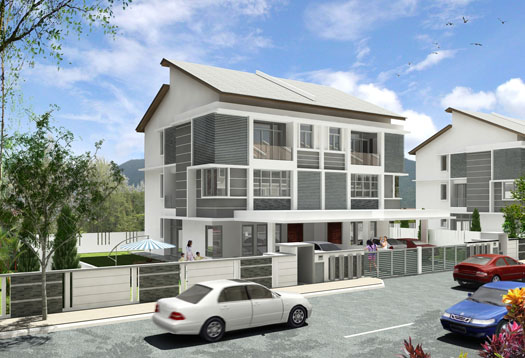
“Less is more” is the design philosophy of notable architect Ludwig Mies van de Rohe. With the Tree Residency, the values of minimalism are fully exuded, conveying a sense of harmony that comes from simplicity.

The minimalism in Tree Residency, however, is not one of emptiness, but one that is out of the box, with bold use of lines, geometry and ratio instead of fluff to achieve a clean and elegant look. More importantly, the materials used to construct Tree Residency are environmentally friendly, as such bringing its inhabitants close to nature.

The overall design of Tree Residency is skewed towards garden living, with eight different designs to suit the different requirements of buyers. The club facility of Tree Residency is complete with badminton court, half-sized Olympic pool and other recreational facilities that will bring out the athlete in you.

Location : One Residence, Sungai Ara, Penang
Property Type : Corner Duplex, Link Duplex, Twin Villa
Land Tenure : Freehold
Total Units: 316
Developer : Ideal Property


Contributed by reader (Update 27/2/13)

[nggallery id=41]


Contributed by reader (Update 24/6/13)

[nggallery id=53]


Contributed by reader (Update 25/8/13)

[nggallery id=59]


Contributed by reader (Update 18/9/13)

[nggallery id=60]

Tags:

Dua Villas @ One Residence

Property News, Sungai Ara/ 14 December 2010 88 comments

Dua Villas is a blend of Chinese chic and contemporary design that combines the best of both elements. With Dua Villas, the architects have put together a home that is balanced, harmonious and ecological. Element that are often neglected in today’s busy lifestyle.

It features a glass canopy which enables daylight to penetrate the home, with French windows, a small backyard and European-styled balcony to provide that opportunity to get in touch and relax with nature.

Dua Villas is built around a courtyard home concept. The 135-unit development forms a small community that is connected with each other through the recreational space that is connected with each unit’s courtyard. This small community lining concept will certainly forge the ties between each family within Dua Villas, Bringing each closer to each other.

In addition, residents can indulge in a relaxing environment while enjoying extensive recreational facilities and equipments offered by an aesthetically pleasing clubhouse.

Location : One Residence, Sungai Ara, Penang
Property Type : 2-Storey Terrace
Land Tenure : Freehold
Total Units: 135
Developer : Ideal Property

Tags:

Penang should allow more reclamation to address land shortage

Property News/ 10 December 2010 No comments

GEORGE TOWN: The state government should allow more reclamation, higher plot ratio, development above 250 feet in certain areas and development of other parts of the island to address the current land shortage for property development.

Penang Real Estate and Housing Developers Association (Rehda) chairman Datuk Jerry Chan said with land scarcity on the island, land prices have "hit the roof".

"Developers are being branded as greedy by some parties due to the escalating prices in property on the island, but land is not cheap here.

"Public housing should not be made the burden of the private sector and we have the right to make our business viable and our profit margins are not high.

"The state government does not privatise land out for developers and we have to buy at market rates.

"The Penang property market is open, transparent and vibrant but there is the problem of supply which is not enough to meet the huge demand for land," said Chan at a press conference.

Hence, Chan suggested the state government look into ways to address the matter.

"There is no much landbank left on the island and the only other option would be for the state government to allow more reclamation.

"Another option would be increase the density by revising the plot ratio in certain areas in addition to those which were revised recently.

"We welcome the revision but more areas should also be allowed to increase the plot ratio.

"What happened in the past is due to the restrictions on plot ratio and exorbitant land prices in place over the past 30 years, developers were handicapped and were forced to build super condos due to rising costs.

"We lost a lot of land due to this low density and low built-up condition that was imposed," Chan said.

The Penang Island Municipal Council (MPPP) in July revised the plot ratio guidelines for high rise properties on the island which allowed developers to build up to 87 units with a total built-up area of 122,000 sq ft per acre compared with 42,000 sq ft per acre previously but has imposed pricing conditions on the units.

Previously, the plot ratio guideline for high-rises on the island was 60 units per acre or 42,000 sq ft per acre.

The new plot ratio guidelines are not applicable for prime residential areas such as Jalan Tunku Abdul Rahman (popularly known as Ayer Rajah Road), the Jesselton area, existing established housing zones and general housing areas, the George Town Heritage Site (which includes the buffer zone), certain areas in Tanjung Bungah and Tanjung Tokong.

Chan said areas like Balik Pulau and Teluk Kumbar, most of which are zoned as agriculture land, should also be opened up for property development.

He also suggested that in certain areas, the 250 ft restriction on hill slope development be relaxed.

"We appeal to the state government to relook into all these aspects and see what can be done.

"They should do away with requirements and guidelines which are unnecessary and allow developers greater freedom instead of imposing limitations," Chan added.


SOURCE: The Edge Property

Tags: