KUALA Lumpur and Penang-based developers are planning to execute some RM6.463bil worth of residential and commercial properties on the island and mainland in the second half year and 2013 despite the tightening of housing credit by banks and a gloomy global economic outlook for the future.
SP Setia Bhd (RM2.563bil GDV), IJM Land Bhd (RM608mil GDV), Mah Sing Group Bhd (RM180mil), Sunway Bhd (RM385mil GDV), Ideal Property Development Sdn Bhd (RM1.1bil GDV), and Ivory Properties Group Bhd (RM1.6bil GDV) are among the developers with plans for new housing projects in Penang.
The developers are displaying some of these projects at The Star Property Fair 2012 held at the Gurney Plaza and G Hotel from July 12-15. About RM6.105bil of projects are located on the island, with the remaining RM358mil planned for Seberang Prai, to be undertaken by Sunway and IJM Land in the second half year and 2013.
As land is still available in the South-West district, the area which covers residential cum commercial neighbourhoods such as Sungai Ara, Batu Maung, Bukit Jambul, Sungai Nibong and Teluk Kumbar continues to be popular locations for developers such as SP Setia, Sunway, IJM Land, and Ideal Property to launch their projects.
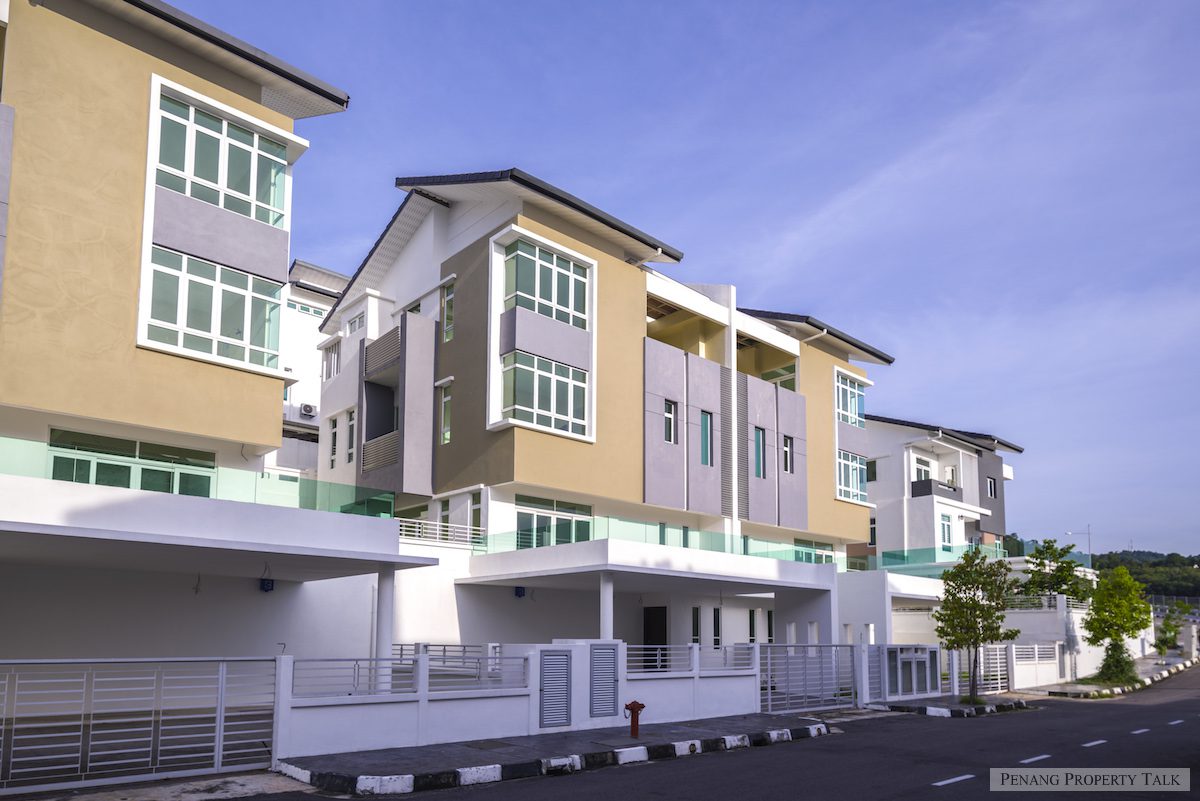
With the exception of Sunway Cassia and IJM’s Trehaus landed property schemes project in Batu Maung and Bukit Jambul, all the other properties planned for the island comprise high-rise projects.
Real Estate and Housing Developers’ Association (Rehda) Penang chairman Datuk Jerry Chan says the trend of development on the island will be towards high-rise developments due to rising land cost.
“A few years back, developers could still build landed properties because they could be priced attractively.
“Nowadays with land cost escalating by about 20% from last year, developers will have to price a semi-detached house from RM900 per sq ft onwards in a prime area like Pulau Tikus as the cost for net land plot is RM500 to RM600 per sq ft.
“If the semi-detached unit has a built-up of 6,000 sq ft, the selling price will be RM5.4mil.
“How many people would fork out RM5.4mil for a semi-detached home?” he asks.
The cost of a plot of net land in a prime area like Pulau Tikus is between RM500 and RM600 per sq ft. In Tanjung Bungah and Batu Ferringhi, land is priced between RM300 and RM400 per sq ft, while in the South-West district it is between RM100 and RM200 per sq ft.
Chan says there is still demand on the island for landed properties priced below RM2mil and condominiums priced below RM1mil.
”This is the reason developers are still carrying out their plans to launch projects despite the stricter policies on housing loans and concerns over the upcoming general election.
“The state’s economic status is still sound,” Chan says.
Penang Master Builders’ and Building Materials Dealers Association executive advisor Datuk Finn Choong says developers are launching projects also because of stability in raw material prices.
“By launching their projects now, developers can lock on to the present prices of construction materials for their projects.”
This means developers can price their properties within the RM400,000 and RM500,000 range
 Affordable range
“A number of the projects planned for launching in the South-West district this year and next year are priced within this affordable range,” he says.
As demand for construction materials for the residential sector has softened over the past 12 months, the pricing of cement, for example, has also not gone above RM15 per 50 kg bag since late last year.
At the peak two years ago, the pricing of cement was above RM18 per 50kg bag.
Henry Butcher Malaysia (Penang) director Dr Teoh Poh Huat says the Penang property market sentiment is still positive.
”High net-worth Penangites living overseas still have confidence in the local property market. Thus, the property values look set to grow, particularly for those properties which are well designed, in good locations, and underpinned by a reputable developer,” he says.
Meanwhile, Henry Butcher Seberang Prai senior manager Fook Tone Huat says the price for properties in Central Seberang Prai has appreciated by about 20% since 2010.
“In prime locations of Seberang Prai, a semi-detached house is now priced about RM750,000, compared with about RM600,000.
“A terraced house in a similar location is now priced about RM350,000 compared with about RM280,000 two years ago.
”Similarly, a bungalow in a Seberang Prai prime location is now about RM1mil, about 20% more than two years ago,” he says.
The value of commercial properties in Seberang Prai has also appreciated by about 20% compared to 2010, Fook adds.
”A three-story shoplot in BM Business Park is now priced around RM700,000.
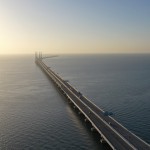
”The value of properties in Seberang Prai is now on the rise because more people are investing in properties on the mainland as the second bridge is scheduled to be completed soon and more funds are coming into the industrial park of South Seberang Prai,” he says.
From SP Setia, there are RM1.288bil worth of properties to be undertaken for the South-West district in the second half and in 2013, while the remaining RM1.275bil of projects are planned for Tanjung Bungah and Sungai Nibong in the North-East district.
These projects include the RM250mil Setia Triangle launched in June, a commercial cum residential scheme in Sungai Ara, the RM335mil Setia Greens 2 in Sungai Ara and a RM53mil condominium project in Teluk Kumbar which will be launched end of 2012 and in early 2013 respectively.
Wave and Breeze
In 2013, SP Setia plans to launch the Wave and Breeze condominium projects for Setia Pearl Island in Sungai Ara, with a GDV of RM350mil and RM300mil respectively, and a RM175mil condominium project in Sungai Nibong.
In the North-East district of the island, SP Setia’s plan is to launch a RM1.1bil mixed-development project in Tanjung Bungah.
“Land on the island is becoming scarce. Since SP Setia wants to continue playing a dominant role in the property market on the island, it is seizing every opportunity to expand its land bank, capitalising on attractive deals,” SP Setia Property (North) general manager Datuk S. Rajoo says.
Penang-based Ideal Property Sdn Bhd has lined up residential and commercial projects with a collective GDV of RM1.1bil for the South-West district from now till the second quarter 2013.
The group plans to launch in August the RM400mil Imperial One project in Sungai Ara on a 9.1-acre site, comprising 768 units of condominiums with built-up areas of 1,050 sq ft and 1,250sq ft priced between RM399,000 and RM499,000 per unit.
The RM400mil Imperial Two, which is waiting for approval and likely to be launched in the second quarter of 2013, comprises properties to be priced between RM400,000 and RM550,000.
Early next year, Ideal plans to launch the first phase of the Ideal Vision Park, a RM1.5bil mixed-development scheme comprising 1,945 units of residential and commercial properties and 550,000sq ft of commercial space.
The first phase comprises RM300mil worth of high-rise residential and commercial properties, which will be priced between RM400,000 and RM600,000. There are four more phases for Ideal Vision Park that will be launched in stages in 2014 and 2015.
Ideal Property managing director Datuk Alex Ooi said the stability of construction material prices allowed developers to build more affordably priced properties that had a wider appeal.
”This is why we are able to focus on building properties priced between the RM400,000 and RM600,000 range,” Ooi adds.
Sunway is undertaking the RM200mil Sunway Cassia project in Batu Maung in November, which comprise 59 units of three-story terraced homes.
IJM Land plans to launch in late 2012 the RM85mil Trehaus scheme, comprising 26 semi-detached properties and 46 villa condominiums, in Bukit Jambul.
In the North-East district, its projects comprise the RM350mil Light Collection III, comprising 190 condominiums and duplex townhouses next to the Penang Bridge on the island. Ivory Properties Group Bhd (IPGB) plans to launch in the second half of 2012 approximately RM1.6bil worth properties on the island.
These projects comprised the first phase of Bayan Mutiara, which has a GDV of about RM800mil, the third and fourth phases of the residential towers for Penang Times Square, which has a RM300mil GDV, a RM130mil sea-fronting condominium block in Batu Ferringhi, and the RM400mil City Mall and City Residence project in Tanjung Tokong.
Elsewhere, Mah Sing plans to launch RM180mil worth of low-rise condominiums in the Batu Ferringhi tourist belt later this year.
Group chief operating officer Teh Heng Chong says Mah Sing will focus on residential properties priced below RM1mil in Penang, Kuala Lumpur, and Johor.
At present, about 70% of our launches are in this price segment, which comprises mainly small serviced residences and linked homes.
In Seberang Prai, the projects planned include the RM185mil Sunway Wellesley by Sunway, comprising residential and commercial properties, and the RM173mil Permatang Sanctuary scheme, comprising 300 semi-detached and bungalow properties.
The Permatang Sanctuary semi-detached properties are priced from RM438,000 onwards, while the bungalows from RM625,000 onwards.
Source: The Star

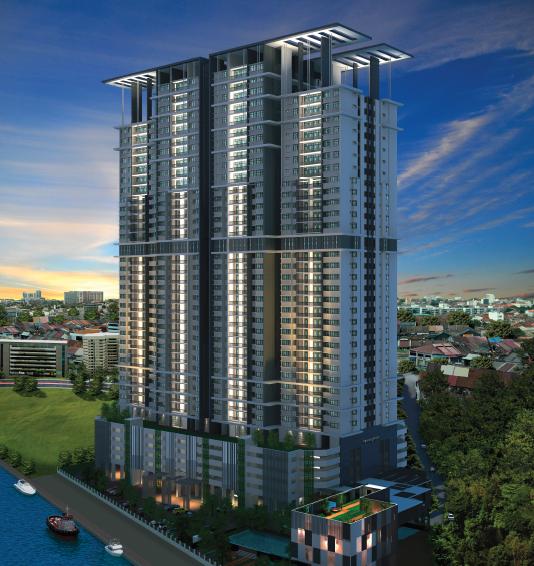
 GEORGE TOWN: The Star Property Fair 2012 ended with a bang with six major exhibitors from Penang and Kuala Lumpur generating some RM100mil in sales.