fbpx

Suria @ Hijau E-Komuniti

affordable-suria-1

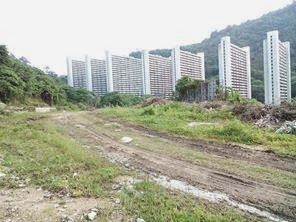
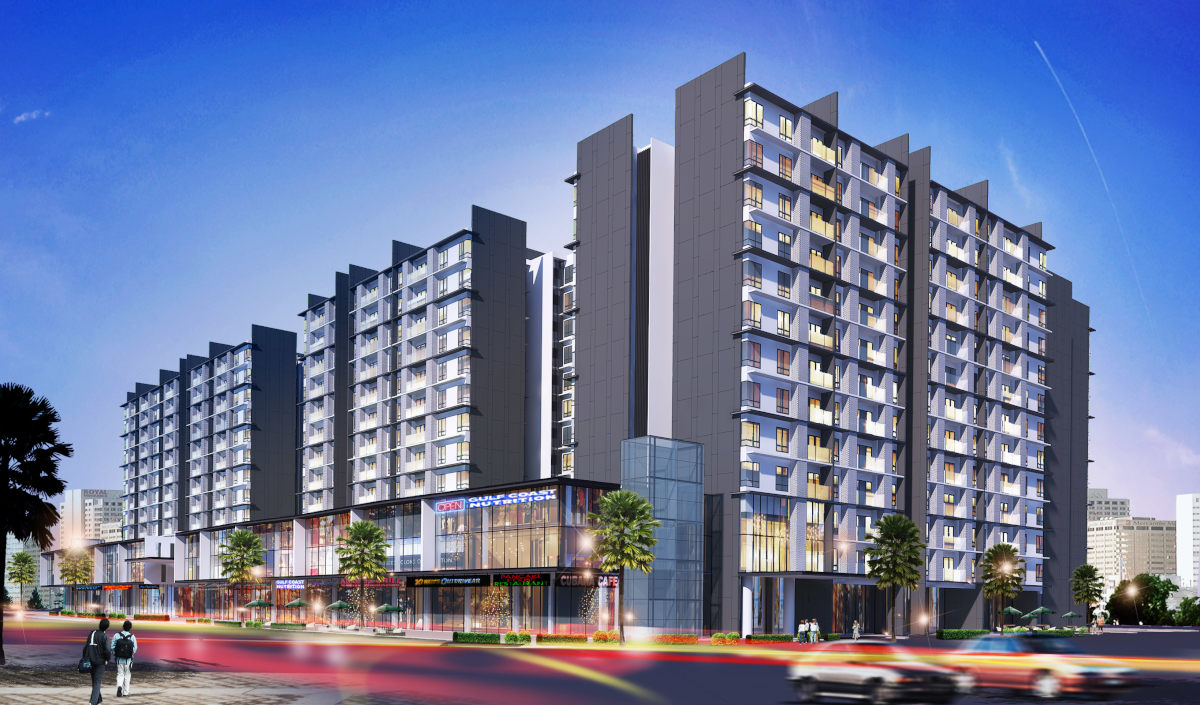
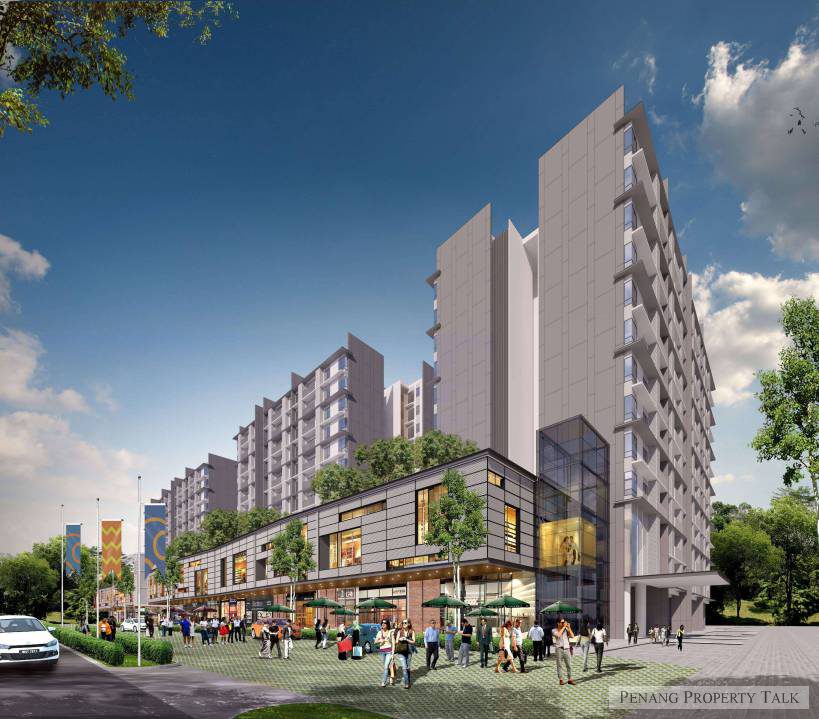
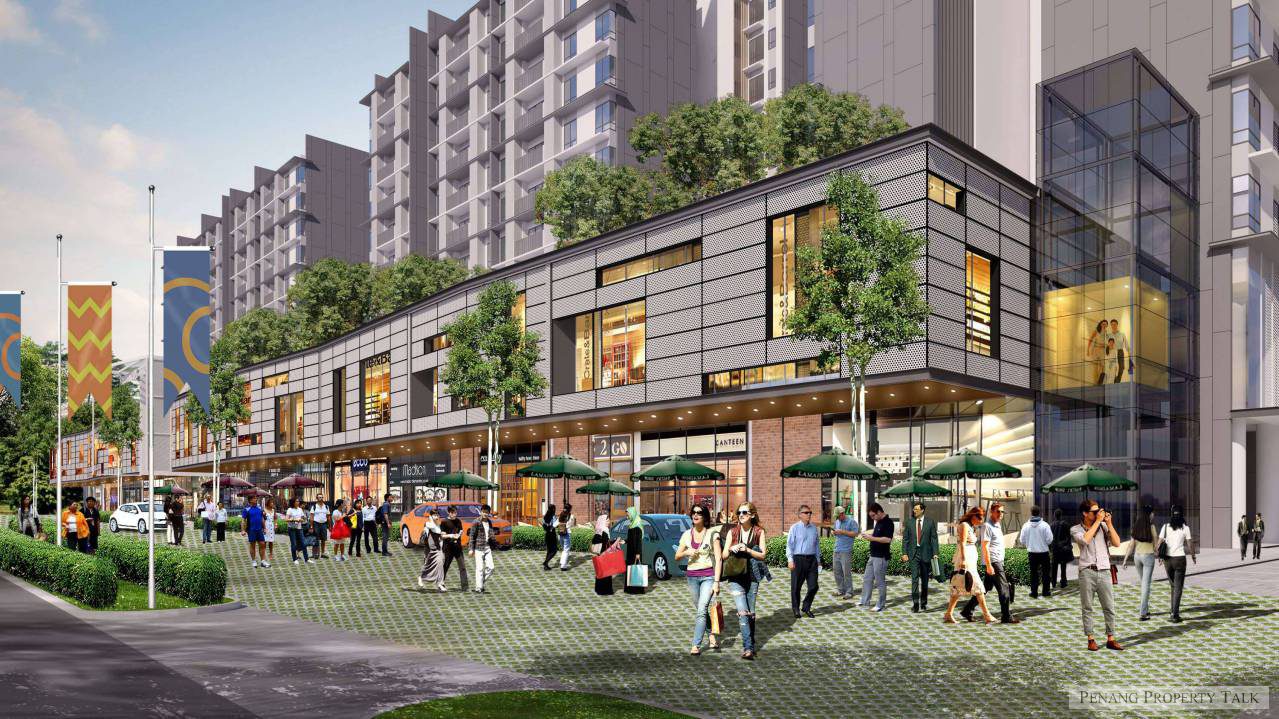
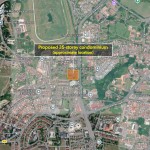
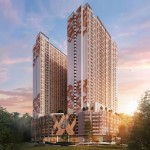
Suria @ Hijau E-Komuniti is the first phase of affordable housing development by Penang State Government at Batu Kawan. Strategically located within the key development area of Bandar Cassia, about 500 meters away from Design Village outlet. Surrounding communities and amenities include Eco Horizon, Aspen Vision City, Utropolis, IKEA Store and KDU University College.

The current phase comprises a total of 520 affordable units, with indicative price starting from RM72,5000 onwards:

  • 800 sq. ft. (149 units) – RM72,500
  • 900 sq.ft. (98 units) – RM168,000
  • 1,000 sq.ft. (273 units) – RM220,000

*UPDATED: Dec 2018*

Property Project : Hijau E-Komuniti
Location : Batu Kawan, Penang
Property Type : Apartment/Condominium
Indicative Price: RM72,500 onwards
Total Units : 520
Project Status: Compeled with OC
Developer : Penang Development Corporation

Register your interest here

(This information will be used to keep you updated on the project and future development.)
*By submitting this Form, you hereby agree to our PDPA Consent Clause.

Location Map:


Hijau E-Komuniti

A strategic masterplan by Penang State Government with a keen emphasis on green living and long term sustainability. This development is expected to provide 11,800 units of affordable housing for 59,000 residents. Meticulously planned down to the finest detail, the development will be implemented in stages through multiple phases.

As its name implies,  Hijau E-Komuniti is pleasantly surrounded by lush greenery and the wonders of nature. The ideal backdrop for green living, it features:

  • 2-km Green Lung
  • Lush landscaping
  • Desirable location close to the sea and surrounded by the rich floras and faunas of Batu Kawan
  • A multitude of recreational spaces
  • Dynamic integrated township
  • Affordable housing and conducive lifestyle
  • Equipped with the latest public amenities and facilities
  • Strategic location – Gateway to Penang
  • Variety of layout plans available to suit individual preferences
  • Satellite city, commercial centres, theme park, Batu Kawan Stadium, Batu Kawan Industrial Park as well as higher learning institutions situated within its vicinity ensure excellent job opportunities and investment value

Hijau E-Komuniti is envisioned to rise as the Northern Corridor Economic Region’s (NCER) main focal point when fully developed. With an estimated 59,000 residents and a wide array of amenities, infrastructure, industrial areas as well as commercial centres within its vicinity, it is set to grow at a rapid pace and ultimately become a self-sustaining ecosystem of its own.

A 20-minute drive through the 2nd Penang Bridge brings you to Bayan Lepas, Penang’s main industrial hub. Additionally a wide range of amenities and facilities including schools, wet markets, banks, health clinics, hypermarkets and other industrial parks are only within a short drive away.

Hijau E-Komuniti will be developed in 5 phases and the construction of phase 1 is already in progress.

More about Penang’s Affordable Housing Scheme

The Master Plan


Tags:

The Marin @ Ferringhi

Batu Ferringhi/ 30 June 2014 22 comments

The Marin at Ferringhi, strategically located within the famous tourist belt of Batu Ferringhi in Penang. This is a freehold development by Plenitude, consisting of 2 towers with only a total of 149 units of condominium. Each floor has only 4 units, with built-up area ranging from 1,750 sq. ft. onwards.

Property Project : The Marin at Ferringhi
Location : Batu Ferringhi, Penang
Property Type : Condominium
Tenure : Freehold
Total Units : 149
Built-up Area: 1,750 sq.ft. – 3,735 sq.ft.
Developer : Plenitude Bayu Sdn. Bhd.

Location Map:

Tags:

Farlim Square

Ayer Itam/ 27 June 2014 8 comments

Farlim Square, strategically located in the heart of Bandar Baru Ayer Itam, a rapidly growing township in Penang Island. It is adjacent to Sunshine Farlim hypermarket, featuring 54 units of 3-Storey Shop Offices and 4 Units of Single-Storey Shoplots with ample parking space.

Features

  • Prime location fronting main road & a popular hypermarket
  • High visibility & catchment traffic
  • Surrounded by established residences & excellent infrastructure
  • Wide corridors for versatile purposes
  • Ample parking with 4-Storey carpark building
  • Ideal for all business needs
  • Excellent investment
  • A focal point of activity
Property Project : Farlim Square
Location : Ayer Itam, Penang
Property Type : Shop Offices
Total Units: 54 (3-storey), 4 (single storey)
Land Tenure: Freehold
Developer : Farlim Group


Location Map:


Tags:

The BTS (build-then-sell) 10:90 concept

Property News/ 26 June 2014 No comments

The housing ministry is proposing the implementation of the BTS (build-then-sell) 10:90 system effective the start of 2015 … but in stages.

Says Urban Wellbeing, Housing and Local Government Deputy Director General Datuk Mohamad Yusoff Ghazali: “It will not be 100% BTS mandatory at the beginning of 2015. We will be proposing some new methods of implementing BTS to the Cabinet.”

The minister felt that by making BTS 100% mandatory and the only system in force, it will further shrink the housing supply and cause house prices to escalate.

Furthermore, he said that it may also have a negative impact on the national economic growth, as the performance of the housing industry is an important component and plays an important role in determining the national economic growth.

Government’s rationale

Apparently, the ministry will still allow the current STB (sell-then-build) system to be used but with some conditions. “Developers who wish to embark on the STB method will have to comply with new conditions.

These additional ‘ultimatums’ will still allow small scale developers to continue building houses but with ‘some terms and conditions’ … clauses which will be spelt out at a later date.” With both the systems – BTS 10:90 and “STB within its new framework” – Mohamad Yusoff does not think the co-existence of both systems will cause any adverse impact on the local property market.

His reason: “I think only a small percentage of developers will be adopting the BTS concept.”

Why allow both systems and promote the BTS 10:90 concept one may ask.

“Our ministry has been in constant dialogue with all the industry players on this subject. We have had many roundtable discussions with the developers, financial institutions and various associations representing the different industry players involved.

After many years of deliberation, the cabinet has decided to implement the BTS system but parallel to the current STB. All parties should be ready when the time comes. However, we will introduce the BTS system in stages to allow the ‘institutions’ to gradually get used to the BTS concept,” explained Mohamad Yusoff.

Besides, it is also what the majority of the people want. He adds however, that the ministry is also encouraging GLCs to pioneer the BTS 10:90 concept. “Research shows that there are several driving, as well as restraining forces, in implementing BTS.”

Rehda’s justification

Rehda president, Datuk Seri Michael Yam explains why BTS and STB should be allowed to co-exist.

Under BTS, developers will face higher holding costs in the form of higher interest as no progressive payment claims can be made until completion and delivery of houses. In the STB system, these interest costs are borne by buyers at end financing rate of BLR-2% in most cases.

Developers would have to bear these interest costs under the BTS system, and at a higher project financing cost of an average 8%-10% of which such costs will be passed on to buyers in the form of higher house prices.

Developers would face a negative cash flow scenario for at least 24 months for landed properties and 36 months for strata development and a larger income lapse, if one were to take into account the date of land purchase. Developers will face a “lumpy (uneven) income” every 24 to 36 months.

The industry will lose its economies of scale in terms of costs of building materials and services, as average unit per development will be significantly reduced.

As such, costs of construction and overall development per unit of housing would be much higher under the BTS system compared to the cost of developing the same housing type in the same location under the STB system.

The provision of infrastructure and social facilities may be compromised as developments will be undertaken in a much smaller scale, making it either falling below the threshold of the requirement to provide such facilities or not feasible for the development to include such facilities / infrastructure unless it is priced at much higher costs.

Eventually the BTS system would cause the industry to backtrack to development trends of the 1970’s, where pockets of small-sized developments were undertaken by developers then, without the need to provide public/social facilities due to their development sizes.

People’s perspective

Once a property lawyer representing developers, Robert Tan says he thought he was risk-safe when he bought into a STB house developed by a public-listed firm. “I was a victim of shoddy workmanship, at jaw-dropping and eye-popping level.

Getting the developer to make good the defects, was similar to begging for charity.” He understands why developers would fight tooth and nail against the BTS system.

“With STB, developers can use other people’s money to do business for profits.”

Law Khin Fah, an avid reader of theSun wonders why in the world STB was ever made the modus operandi. “For most goods we buy, we only pay the full price when the product is completed/delivered. Why is it then that when we buy a house, we must pay progressively while the house is being built? In property, the developer is using our money to build and does not have to take risks using his own money.

If the project sales is not good/viable, the developer can just abandon the project and the house buyers will be in big trouble and debt, with no house but a bank loan to service.” As a house buyer, Law is willing to pay more with the use of BTS 10:90.

“The only additional cost would be the interest cost during construction which the house buyer must bear in any event.”

James Tan, a family and business man, principal of JT Properties, looks at the system from all angles.

“I think implementation of the BTS 10:90 is a good idea mainly because, in practice, I believe only a few developers can adopt this scheme, namely the bigger boys and cash rich developers. This will, in a way, protect purchasers from those developers who abandon their projects.

The flipside of it is that most developers will require bigger financing for their projects, especially during the two to three year construction period … and will then probably pass the financial burden onto the purchasers, causing the property to become more expensive in the end.”

Flip side

Tan thinks the conventional method, the “progressive payment” is better suited for our local market. His reason: “The risks and costs are shared between the parties involved (i.e. purchaser, developer and the bank). For a developer, they will not need a high working capital and will be able to undertake bigger projects.

The risk of the developer abandoning their project can be mitigated by them having to put up a bond with a statutory body before they start a project. The bond amount should commensurate with the size of the project.

So, if the project does go awry, there will be some buffer (the bond fund) for someone else to step into the developer’s shoes to complete the project.”

Tan asks that we consider Malaysia’s fairly young population. “About half the people are below the age of 30. This creates a tremendous need for housing, especially in urban areas.

(Take PJ for an example, the population doubles between seven and nine years.) If the government strictly implements the BTS system, we would see a drastic drop in the number of new houses in the offering, leaving the big boys (the rich few) to monopolise the market which I think is not very good,” he reasons.

Then again, he adds, “BTS can be a ‘bubble’ in the making … especially for those who are not so disciplined in managing their finances; they may be lured to attractive offerings thinking that they just need to put a 10% down, and that when the project is completed after three years and things are rosier, they can make a hefty profit when they flip (sell) the property.

This creates false hope, demand, price hike … something that is not sustainable … and at the end of the day, the consumer is the one who generally suffers.

BRDB’s 50th anniversary

Bandar Raya Developments Berhad, better known under the acronym BRDB, recently celebrated its 50th anniversary. The renowned property development firm first stamped its mark as a developer, when it undertook a project offering link houses and bungalows in Bukit Bandaraya in 1973.

Its heritage in Bangsar however, began with its first community there in 1964.

Over the years, BRDB has made a distinguished name for itself, one that is reflective of its brand promise “Inspired by the richness of life”, and anchored on three pillars of innovation which are intelligent design, uplifting aesthetics and cosmopolitan living.

Today, luxurious developments such as Sri Penaga, Palmyra, Bangsar Hill, One Menerung, Serai and others, are synonymous with the BRDB brand. These developments resonate with high value and superb lifestyle, coupled with the development firm’s commitment to quality and craftsmanship.

In commemoration of its 50 years of excellence, enriching the lives of the communities it has built, BRDB hosted an exclusive five-day exhibition, showcasing its notable and artistic, world-class developments at Bangsar Shopping Centre. The anniversary event was officiated by its executive chairman Datuk Sri Akbar Khan.

Source: The Sun Daily

Tags:

River Tropics

Prai/ 25 June 2014 54 comments

River Tropics

River Tropics,  a green home condominium project by NB Tropics in Permatang Pauh, Prai. This development is strategically located next to Tesco Extra, with easy to access to Penang bridge via North South Expressway.

Comprising 140 standard units with size ranging from 1,300 sq.ft. – 1,500 sq.ft. For those who need more space, there are also 8 duplex units that has a built-up area of more than 2,300 sq.ft.

Standard units

  • Total size range : 1,300 sq ft – 1,500 sq ft
  • Selling price : RM350k – RM500k
  • 3 + 1 Rooms
  • 3 Bathrooms

Duplex units

  • 2,300 sq ft – 2,700 sq ft
  • RM700k – RM800k
  • 4 + 1 Rooms
  • 4 Bathrooms

Facilities

  • Multi-purpose hall
  • Gym
  • Children playground
  • Swimming Pool & Jacuzzi
  • Kid’s Pool
  • Rooftop Community Garden
  • Green Retreat
  • Poolside Shelter
  • Open Air Amphitheatre under the stars
  • Outdoor Room
  • Active: Picnic on roof top, BBQ facilities
  • Passive: Meditation room, Green Piazza
Project Name : River Tropics
Location :
 Permatang Pauh, Prai, Penang
Property Type : Condominium
No. of Storey: 18
Built-up Area :  1,300 sq.ft. – 2,700 sq.ft
Total Units : 140 (standard), 8 (duplex)
Land Tenure : Freehold
Developer : NB Tropics Development Sdn. Bhd.

Location Map:


Tags: